MONTIEN BOONMA
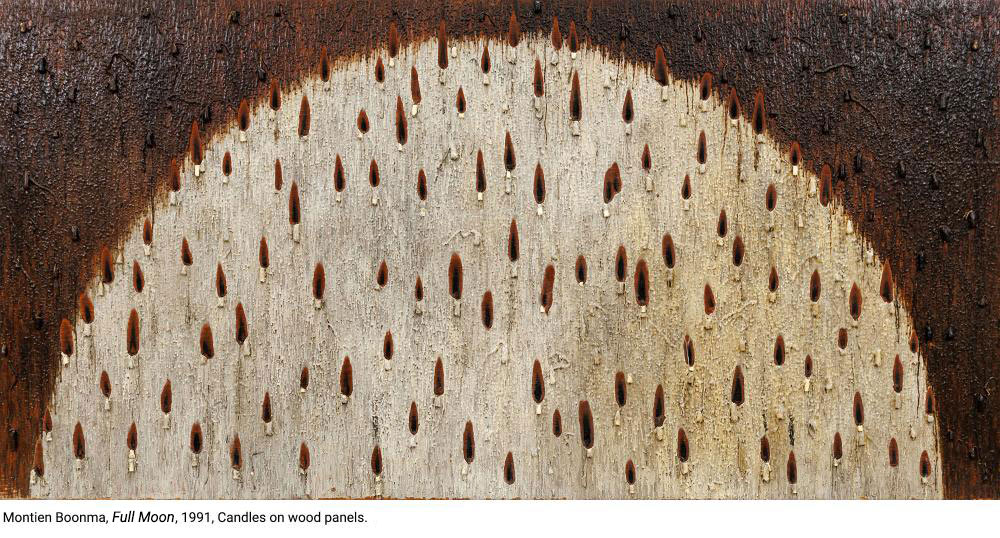
Montien Boonma’s legacy is thoughtfully re-examined in a display at Dib Bangkok, home to one of the world’s deepest collections of the artist’s work. The display highlights major works from the 1990s and includes collaborations with the Estate of Montien Boonma to recreate important lost pieces that have not been seen in over thirty years.
Montien Boonma (1953–2000) was a pivotal figure whose practice bridged Thai and international contemporary art. By the 1990s, Boonma’s exposure to European artists pushing beyond minimalist aesthetics, including Joseph Beuys and Jannis Kounellis, had influenced his mature practice. Upon returning to Thailand, he integrated local materials into multisensory installations that responded to Thailand’s rapid societal changes and frequently created work that was presented outside traditional art spaces. A practicing Buddhist, Boonma explores metaphysical concepts through material and negative space, inviting mediative encounters with emptiness as much as with form. A hallmark of his practice is the creation of ephemeral sensory experiences. Through the scent of herbal pastes, Boonma foregrounds the simple yet profound bodily experience of breathing. Working closely with international conservators and the artist’s assistants and associates, Dib Bangkok has reactivated the scent of herbal pastes for the public to experience as the artist envisioned.
Research in collaboration with the Estate of Montien Boonma has uncovered details about the artist’s process for conceptualizing major artworks such as Lotus Sound, Zodiac Houses, and Prayer of Abihsot—one of Boonma’s only video installations. A sound recording of the temple bells that inspired Lotus Sound offers a window into how Boonma gave form to nonvisual experiences.
Presenting lesser-known artworks alongside multisensory masterworks, the display of Montien Boonma’s work at Dib Bangkok aims to broaden our understanding of his crucial contributions to the dialogue between Thai and global contemporary art