BUILDING
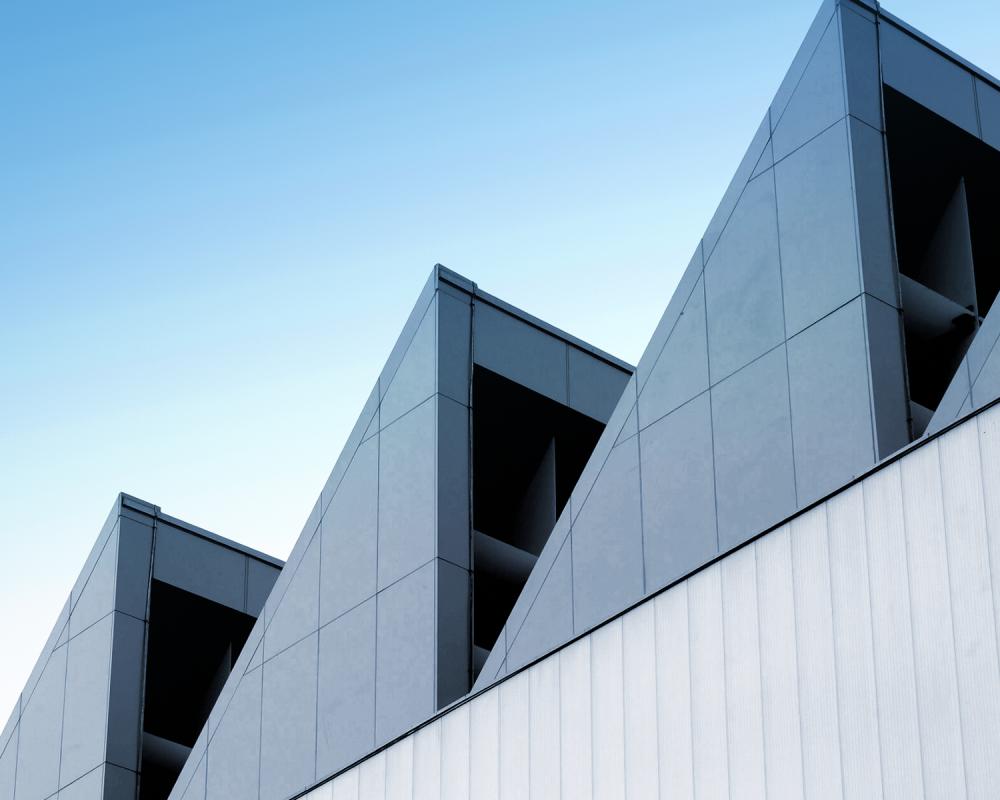
Dib Bangkok is housed in a repurposed 1980s steel warehouse redesigned by Kulapat Yantrasast of WHY Architecture. It preserves much of the original industrial structure while integrating a contemporary aesthetic, creating a space that acknowledges its historic origins. The design retains some distinctive architectural elements and characteristics of the original building, including exposed concrete pillars and traditional Thai-Chinese window grilles, subtly linking past and present—an idea reflected in the museum’s name, Dib, a Thai word which means “raw” or “authentic.”
Underlying the overall architectural concept is a spatial progression inspired by the Buddhist notion of enlightenment. The design reflects beginning from a raw, earthly state and gradually, through discipline and practice, reaching a pure state. The journey starts on the ground level, defined by a series of concrete pillars and a rough, industrial aesthetic; the second level offers a more intimate atmosphere; and the third level becomes airy with tranquil, high-ceilinged galleries, softly illuminated by natural light from skylights.
A minimal palette of whites and grays, unified by industrial tones, establishes a loft-like atmosphere that serves as a neutral environment, allowing each exhibition to cast new light on the artworks.
Other notable architectural features include a large central courtyard; The Chapel, a cone-shaped gallery space with a mosaic-tiled exterior; an outdoor sculpture garden along the second-floor walkway; a sawtooth roof on the third floor; and a penthouse for special events on the fourth. Together, these features invite visitors into a series of reflective and thought-provoking encounters with art and architecture, blending history, innovation, and tranquility.